


Annam Milk © All Rights Reserved.

Family health is shaped less by occasional resolutions than by repeated daily choices, and few of those choices are as consistent as what is served at mealtimes. Households that agree on a handful of simple food habits tend to find them easier to sustain than elaborate diet plans.
This article sets out ten practical habits, grouped by theme, covering dairy, vegetables, meal structure, snacks, hydration and the routines that hold them together. Families beginning with a reliable supply of cow milk in Chennai and fresh produce will find the changes easier to maintain.
Habit 1: Begin the Day With a Proper Breakfast
A morning meal supports concentration, energy and mood, particularly for children at school. Aim for a combination of protein, fibre and a source of slow-release energy. Idli with sambar, a vegetable upma, ragi porridge or a besan chilla with a glass of milk all meet that standard.
Skipped breakfasts often lead to heavy snacking later. Even a simple, quick meal prepared the night before is better than none. Set a consistent time, so the routine becomes automatic.
Habit 2: Include Milk or Dairy Every Day
Milk and dairy provide protein, calcium, phosphorus and vitamin B12, nutrients that matter for bone growth in children and bone maintenance in adults. A glass of milk, a bowl of curd or a serving of paneer or buttermilk can fill that role.
Freshness and handling matter. Choose a supplier who delivers early and keeps the milk chilled, boil it before drinking and store it in a clean, covered container in the refrigerator. Quantities should suit age. Excess milk can crowd out solid food, so offer it between or after meals.
Habit 3: Fill Half the Plate With Vegetables
A simple visual rule works well: half of every lunch and dinner plate should be vegetables. Use a mix of colours, such as leafy greens, gourds, carrots, beetroot, beans and tomatoes, since different colours supply different vitamins and minerals.
Families who find this difficult can start by adding one extra vegetable to each main meal. Grated vegetables in parathas, spinach in dosa batter and vegetable-packed sambar are easy ways to raise intake without a fight.
Habit 4: Choose Fresh, Seasonal and Where Possible Organic Produce
Seasonal vegetables are usually fresher, tastier and more affordable. Many families are concerned about pesticide residues, especially for children, and so many people choose to buy organic produce. Whichever you choose, wash vegetables thoroughly and cook leafy greens and roots in ways that preserve nutrients, such as light steaming or quick stir-frying.
Buy smaller quantities more often, so produce is used while fresh. Store leafy greens wrapped in cloth in the refrigerator, and keep roots in a cool, dry place.
Habits 5: Eat At Least One Meal Together
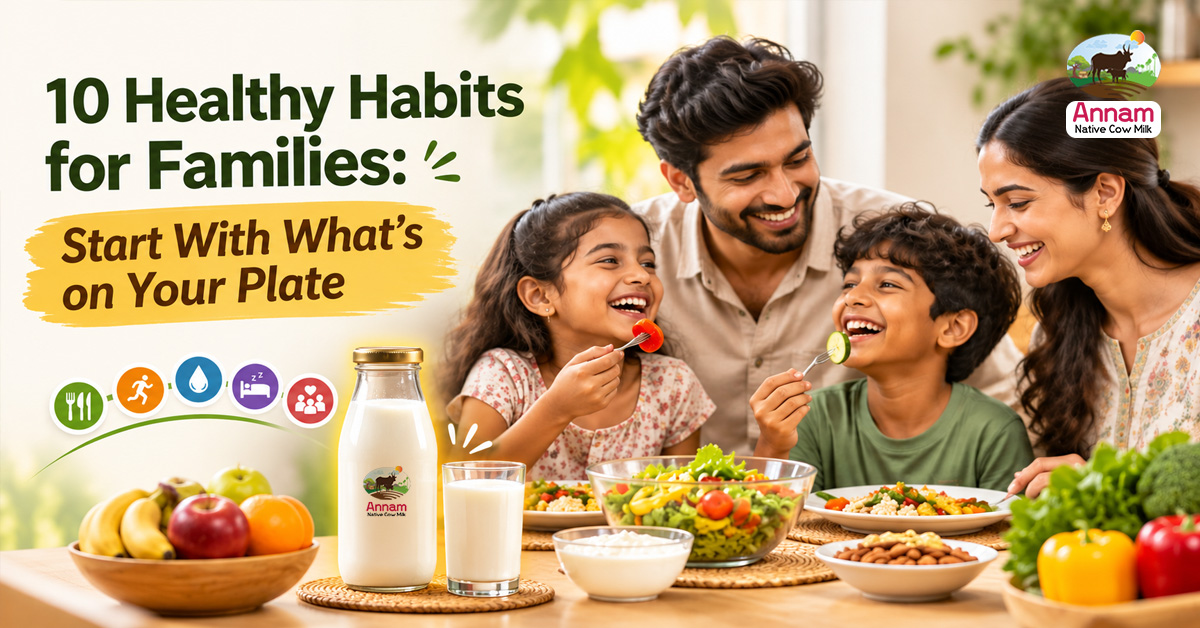
Shared meals encourage children to try new foods, support conversation and make it easier to notice changes in appetite or mood. Switch off televisions and phones during the meal so attention stays on the food and the family.
If weekday schedules make this hard, choose dinner or a weekend breakfast as the fixed family meal. Let children help set the table or serve, so the meal feels like something shared and not simply another task to finish.
Habit 6: Keep Portions Sensible
Use smaller plates for children, serve modest first helpings and allow seconds if they are still hungry. Don’t force children to clean their plate, it can diminish their ability to identify when they are full. Trust appetite, and keep servings of rice and fried items measured so vegetables and protein get adequate space. Encourage slow eating, since it gives the body time to signal fullness.
Habit 7: Rethink Snacks and Sugary Drinks
Snacks are where many family diets drift. Packaged chips, biscuits, sweetened drinks and sugary cereals add calories with few nutrients.
- Keep fruit, roasted chana, nuts, sprouts and makhana visible and easy to reach
- Offer curd, buttermilk or milk-based drinks in place of aerated beverages
- Prepare homemade options, such as vegetable cutlets or fruit chaat, for after-school hunger
- Save sweets for occasions rather than daily habits
Children copy what adults do, so family-wide rules work better than rules applied only to the young.
Habit 8: Drink Enough Water
Hydration is easily overlooked, especially in Chennai’s heat. Water is good for digestion, focus and temperature control. Keep a bottle at hand, set reminders for children during school hours and offer water before reaching for juice or soft drinks.
High water content fruits like watermelon, cucumber and oranges contribute to daily intake. Coconut water and buttermilk are also useful, in moderation, during hot weather.
Habit 9: Plan Your Meals For The Week
Having a short weekly schedule cuts down those last minute decisions that can lead to takeaway or processed food. Decide on a few core meals, make a shopping list and prepare basics such as chopped vegetables or soaked pulses in advance.
Involve the family in the planning. Let each person suggest one meal, and choose a vegetable-based dish for at least two days.
Habits 10: Build Routines That Last
Regular meal times, enough sleep and daily physical activity support the benefits of good food. Walk after dinner, play outdoors at the weekend and keep screens out of the bedroom. Small, steady habits outperform dramatic changes that fade within a few weeks.
Anchor new habits to existing ones, such as drinking water right after brushing teeth or taking a short family walk after dinner.
How to Make It Work for Your Family
Take small steps. Begin with a couple of habits, such as a glass of milk a day, a vegetable with each meal, and a family dinner. Add other habits as they become routine. Involve children in choosing vegetables, washing produce and helping with simple cooking, since participation increases willingness to eat what they have made.
Where there are medical conditions, allergies or lactose intolerance, adjust these habits with the guidance of a doctor or dietitian.
Keep the habits visible at home. A weekly menu stuck on the refrigerator, a fruit bowl on the dining table and a water jug on the counter all prompt better choices without any reminders. Let each family member pick one habit they care about and track it for two weeks, with a small celebration at the end that does not involve sweets.
A Local Source for the Daily Essentials
Annam Milk delivers fresh cow milk to Chennai households, with attention to early delivery and careful handling. Its team supports families who want a dependable daily supply and an easier way to include fresh produce in their routine.
Consistency in sourcing makes healthy habits simpler, because the right ingredients are already in the kitchen when meals are planned.
Beginning With the Next Meal
Healthy family eating does not require expensive ingredients or complicated rules. It grows from repeated choices: a proper breakfast, daily dairy, plenty of vegetables, mindful snacks and a shared table. Start with the next meal, and build from there. For families ready to bring fresh produce into the weekly routine, exploring organic vegetables in Chennai is a practical place to start.
