


Annam Milk © All Rights Reserved.

Date: 29 Oct 2026
Category: OrganicA2 Milk + Organic Vegetables: A Daily Combo for a Healthier Family
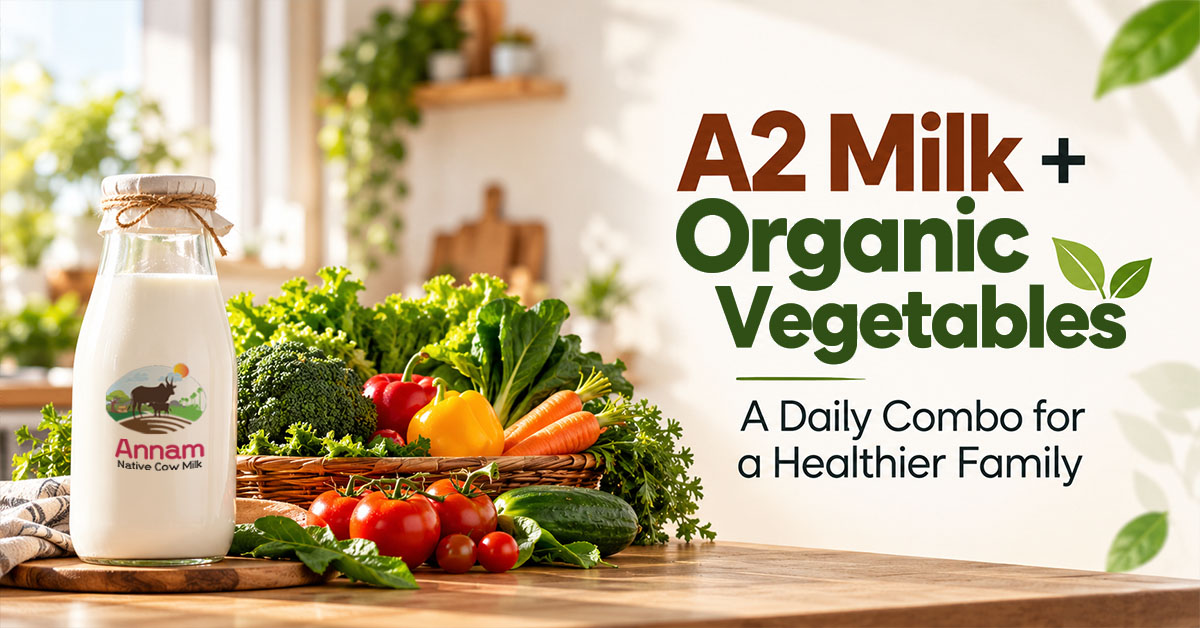
It is a school-day morning, the lunch boxes are half packed, and a parent is trying to remember whether anyone in the house ate a vegetable yesterday. Healthy eating rarely fails because of lack of knowledge. It fails because of time, fussy eaters and the daily scramble. Two simple habits can make it easier: a glass of fresh A2 milk and a plate with organic vegetables, built into the routine instead of treated as special projects.
This guide explains what A2 milk is, what organic vegetables offer, how the two work together nutritionally, ideas for breakfast, lunch boxes and dinner, how to handle fussy children, what to check when buying and how to store everything so it stays fresh. If you are looking for A2 milk Chennai families rely on, this will help you start well.
What A2 Milk Actually Is
Cow’s milk contains several proteins, and beta-casein is one of the main ones. It comes in two common forms, A1 and A2. Many modern dairy herds produce milk with a mix of both, while milk labelled A2 comes from cows that carry only the A2 form, which is typical of many indigenous Indian breeds.
Some people find A2 milk easier on the stomach, and some families switch after noticing less bloating. Research on this is still developing, and results vary from person to age. A2 milk is not lactose-free, so anyone with lactose intolerance or a milk allergy should speak to a doctor. What can be said with confidence is that it provides the same core nutrition as other cow milk: protein, calcium, phosphorus, vitamin B12 and natural fats.
What Organic Vegetables Bring to the Table
Organic vegetables are grown without synthetic pesticides and chemical fertilisers, using methods such as compost, crop rotation and natural pest control. Many families choose them for reduced pesticide residue, especially for children, and for the taste of produce that is harvested and sold quickly.
Nutritionally, a vegetable is valuable whether it is organic or not, so the most important step is eating more of them. Where organic adds value is in how the produce is grown and handled. Local, seasonal vegetables travel less and tend to be fresher, which also helps retain vitamins. Leafy greens, gourds, beans, carrots, beetroot, tomatoes and root vegetables all suit everyday Indian cooking.
Why the Two Work Well Together
The combination covers a lot of ground in a simple way.
- Calcium and vitamin D partners: Milk supplies calcium, while vegetables such as greens, beans and broccoli add more calcium and vitamin K, which support bone health
- Protein with fibre: Milk’s protein keeps meals filling, and the fibre in vegetables supports digestion and steady energy
- Fat-soluble vitamins: The natural fat in milk helps the body absorb vitamins A, E and K from vegetables
- Iron and vitamin C: Milk is low in iron, but vegetables such as spinach, beetroot and drumstick leaves provide it, and tomatoes or lemon juice help absorption
- Variety of minerals: Potassium and magnesium from vegetables complement the phosphorus and B12 in milk
Neither replaces a balanced diet with grains, pulses, fruit and nuts. Together, they make it easier to cover the basics every day.
Breakfast and Snack Ideas
Mornings need speed, so simple pairings work best.
A glass of warm milk with a vegetable-stuffed paratha or a vegetable upma covers protein, fibre and energy. Ragi porridge made with milk and served with a side of cucumber or carrot sticks works well for younger children. Vegetable omelettes or besan chillas go nicely with a glass of milk for families that eat eggs or pulses. For snacks, a milk-based smoothie with banana and a little spinach is gentler in taste than it sounds, and the fruit hides the green. Roasted vegetable sticks with a curd dip bring in dairy and crunch at the same time.
Lunch Boxes and Dinner Plates
For lunch boxes, aim for one vegetable that travels well. Dry sabzis with carrot, beans, capsicum or cabbage stay fresh, and a small container of curd or buttermilk adds dairy. Vegetable pulao, lemon rice with peas and mini idlis with a mixed-vegetable sambar are easy to pack and eat.
At dinner, a simple plate can include a dal, a seasonal vegetable dish, a chapati or rice and a small bowl of curd. On days when the family wants something lighter, a vegetable soup thickened with a little milk, or a baked vegetable dish with a milk-based sauce, covers the bases. Milk before bed is a habit in many homes, and a warm glass with a pinch of turmeric or cardamom can round off the day.
Handling Fussy Eaters Without a Fight
Children often reject vegetables and sometimes milk. A few approaches keep the peace.
- Blend vegetables into familiar foods, such as grated carrot in parathas, spinach in dosa batter or pumpkin in soups
- Serve vegetables in different shapes, colours and styles, since texture is often the issue
- Let children help wash, peel or pick vegetables, which makes them more willing to eat them
- Offer milk in a fun cup or with a natural flavour such as cardamom, dates or a little jaggery
- Keep portions small and repeat exposure, since children often need many tries before accepting a new taste
- Avoid using sweets as rewards for finishing vegetables
Patience matters more than tricks. A calm table does more for long-term habits than any single recipe.
Buying and Storing for Freshness
Freshness decides how much of the value reaches the plate, so a few checks help.
For milk, ask about the source, how soon it is delivered after milking and whether it stays chilled in transit. Check the smell and look on arrival, and boil it before drinking. Store it in a clean, covered container in the main body of the fridge and use it within a day or two.
For vegetables, look for firm texture, bright colour and no wilting or soft spots. Wash them just before use, not before storing, since moisture speeds up spoilage. Keep leafy greens wrapped in a cloth or paper in the fridge, and store roots such as potatoes and onions in a cool, dry, dark place. Buy on a regular basis in smaller quantities, so produce is used at its best.
Annam Milk provides farm fresh cow milk to the families of Chennai with short supply routes and careful handling. Its team focuses on keeping freshness steady, so what arrives at the door is as close to the farm as possible.
Making It a Daily Habit
Healthy eating becomes easier when the basics are in place and require little thought. A glass of fresh milk and a few servings of vegetables, spread across the day, will do more for a family than any occasional diet plan. Start with one change, such as a vegetable in every lunch box or a regular milk delivery, and build from there. When you are ready to bring fresh produce into the routine, explore organic vegetables in Chennai and see how easily it can sit alongside your daily milk.
