


Annam Milk © All Rights Reserved.

Most of us never questioned the milk we grew up drinking. It was just milk. White, cold, poured into a steel tumbler every morning before school. Nobody asked what kind of protein was in it or which breed of cow it came from. That was not really the conversation back then.
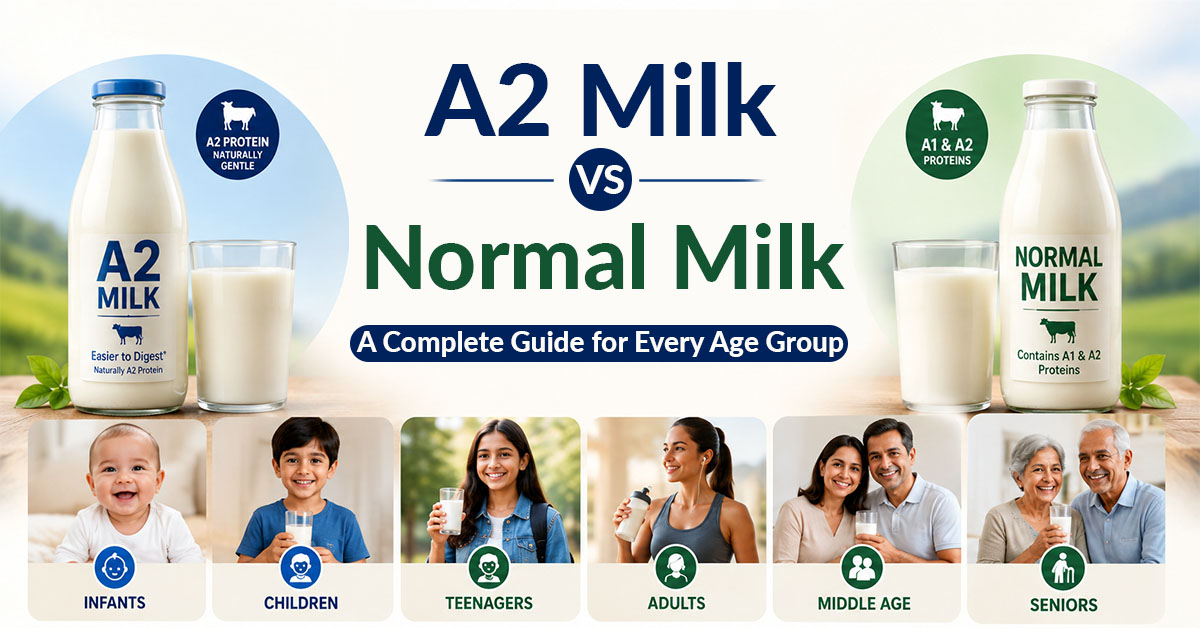
But things have changed. More people are paying attention to what they put in their bodies, and milk, something so basic and everyday, is now at the center of a genuinely important health discussion. The difference between A2 milk and regular commercial milk is not marketing. It is biochemistry, and depending on your age and how your gut works, it can make a real difference to how you feel. For a growing number of families choosing A2 Milk Chennai, this is not a trend. It is a deliberate shift. In this blog, we will take a closer look at what actually separates these two types of milk, why it matters and how that difference plays out across different stages of life.
It All Comes Down to One Protein
There is more going on inside a glass of milk than most people realise. The dominant one is casein, and within that, a specific fraction called beta-casein determines a lot. There are two variants: A1 and A2. Most commercial dairy cows, the high-yield breeds bred for volume, produce predominantly A1 beta-casein. Native Indian breeds like Ongole, Kangeyam, Sahiwal, and Gir produce milk that is predominantly A2.
Here is where it gets relevant. When A1 beta-casein is broken down during digestion, it releases a peptide called BCM-7. Research has associated BCM-7 with gut discomfort, bloating, and low-grade inflammation in people who are sensitive to it. A2 beta-casein does not produce BCM-7. Same milk, same lactose, different protein structure, and a very different experience for the person drinking it.
How It Plays Out at Different Ages
Infants and Toddlers
Breast milk is naturally A2. So when a baby transitions to cow's milk, A2 is the closer match. Parents who have noticed colic, gas, or general fussiness after introducing regular milk often blame lactose. But lactose may not always be the culprit. BCM-7 from A1 protein can irritate a gut that is still figuring itself out. A2 milk tends to sit more gently, and many parents report a noticeable difference within weeks of making the switch.
Children Between 4 and 12
Growing children need calcium, phosphorus, and quality protein. Both milk types provide these. The distinction is in how well the body actually absorbs and uses what it takes in. When the gut is under stress, even mild and low-grade, nutrient absorption suffers. A2 milk reduces that stress for sensitive children.
Children who benefit most from A2 milk tend to show:
- Recurring stomach aches after drinking regular milk
- Frequent bloating that parents often mistake for lactose issues
- Better energy and sleep after switching to A2
Teenagers
Adolescence is the window when bones absorb calcium most efficiently. Miss it and you pay for it later. Most teenagers who quietly stop drinking milk do so because it makes them uncomfortable, not because they dislike the taste. They switch to soft drinks, packaged juices, and worse. A2 milk can keep them on dairy without the side effects, and that matters for bone density in their thirties and forties.
Adults
This is where the most striking change tends to happen. A significant number of adults who have written themselves off as lactose intolerant are actually responding to A1 protein. A study published in the European Journal of Clinical Nutrition found that adults drinking A2 milk reported far less bloating and abdominal pain than those drinking conventional milk, with identical lactose levels in both. That finding quietly dismantles a lot of assumptions.
Beyond digestion, adults drinking A2 milk regularly often report:
- Less post-meal heaviness
- Cleaner energy without the sluggishness some associate with commercial milk
- Better tolerance for dairy-based foods like curd and ghee made from A2 milk
The Elderly
After fifty, digestion slows down. The body becomes less forgiving of foods that cause inflammation or irritation. Many older adults give up milk entirely because it stops agreeing with them, and they lose an important source of calcium and protein at exactly the stage of life when those nutrients matter most for bone and muscle maintenance. A2 milk often brings them back to dairy without the discomfort. It is a practical solution to a very real problem.
Is Regular Milk Without Merit?
Not at all. Commercial A1 milk is nutritious. Billions of people drink it without any obvious problems. But for those with sensitive digestion, for young children, elderly family members, and anyone dealing with unexplained gut discomfort, A2 milk is simply a more considered option. The nutritional profile is comparable. The digestive experience is not.
What Actually Makes A2 Milk Worth Buying
The label alone is not enough. Plenty of products claim A2 without the farming practices to back it up. What actually determines quality is the breed of cow, how she is raised, and how the milk is handled after milking. Native breeds raised on organic fodder, allowed to graze freely, and milked without stress produce milk that is genuinely different from what comes out of industrial dairy operations. Raw or minimally processed milk retains more of its natural enzymes. Glass bottles keep those nutrients intact in a way plastic never will.
We started Annam Milk because we wanted our own families to have access to milk that was actually what it claimed to be. Nothing added. Nothing removed. Just honest milk from native cows that are fed well, treated well, and given space to live as they should. Our Fresh Cow Milk comes from breeds like Ongole, Kangeyam, Umbalachery, and Kanchipuram cows raised on our organic farm, delivered raw and unadulterated to your door in glass bottles on the same day of milking. We do not pasteurize to extend shelf life. We do not add preservatives. We just make sure what leaves our farm in the morning is the same thing that reaches your kitchen. If you have been looking for milk your whole family can actually thrive on, from the youngest to the oldest, we would love for you to give Annam a try. A2 Milk Chennai families have trusted us for years, and we take that trust seriously, one bottle at a time.
