


Annam Milk © All Rights Reserved.

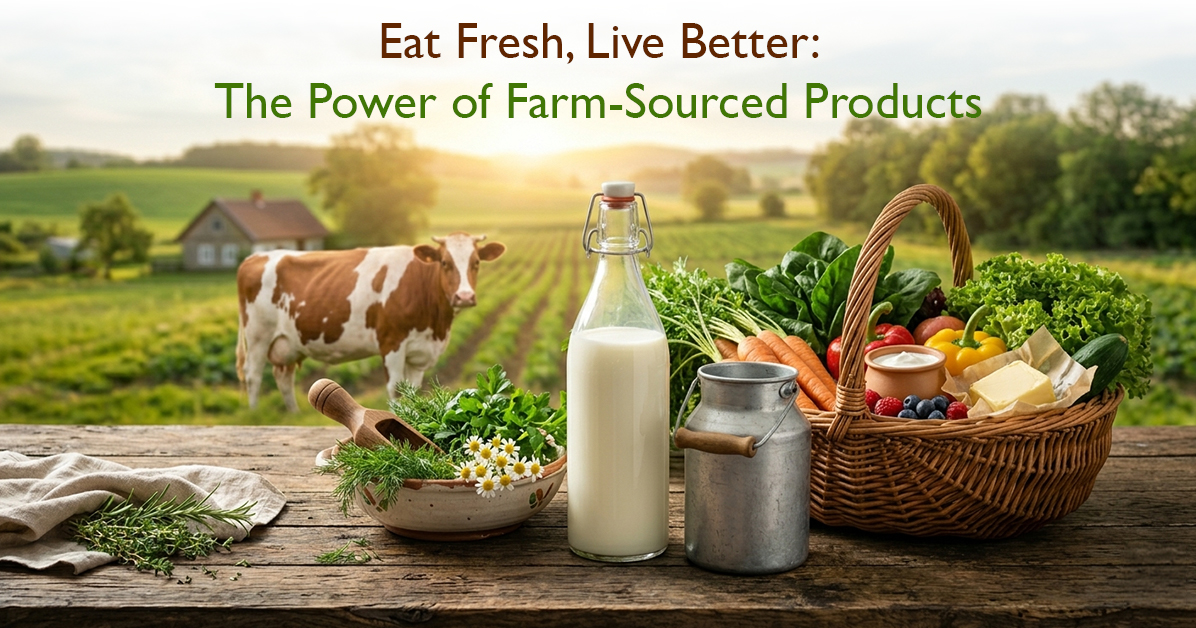
Supermarket shelves prioritize industrial durability over actual nutrition. Most families have grown accustomed to milk that stays stable for weeks, oblivious to the fact that this shelf life comes at the expense of natural enzymes. Moving toward farm fresh products is a return to a biological baseline rather than a passing trend. When you eliminate centralized processing, you get food that retains its original vitality. At Annam Milk, this principle is not a corporate slogan. It is a commitment to organic farms in Chennai that practice "Iyarkai Vazhi Velanmai," a natural farming method centered on soil health and animal welfare.
The Truth Behind "Commercial" Freshness
What shows up as “fresh” in supermarkets is often the result of long supply chains and controlled storage, not proximity. Produce is selected for appearance and durability, then handled to maintain that look in transit. The result is consistent, but it can come at the cost of flavour and natural variability, which you’d find in less processed sources.
- The Pasteurization Trap: Standard milk is scorched at high temperatures to extend its life, which effectively kills beneficial enzymes and warp protein structures. This process makes the milk shelf-stable but biologically inert. You lose alkaline phosphatase and lipase, both essential for actual nutrient absorption.
- Chemical Preservation: Many fruits and vegetables are coated in waxes or treated with gases to delay ripening during transport. This creates the illusion of freshness while the internal nutrients continue to degrade. You are eating a visual shell, not a nutrient source.
- The Nutrient Gap: Every hour that passes after a vegetable is harvested, its vitamin C and antioxidant levels drop. By the time a standard supermarket head of spinach reaches your plate, it may have lost over 50 percent of its folate and carotenoids.
Choosing farm sourced products eliminates these variables. When the gap between the farm and your table is measured in hours rather than weeks, you are consuming the maximum nutritional density the plant or animal can offer. It is the difference between a product that merely fills space and one that actually fuels cellular repair. High-quality food shouldn't need a chemical stabilizer to survive a cross-country journey.
Why Native Breeds Matter for Dairy
Native Kangeyam and Ongole cattle produce milk containing the A2 beta-casein protein, which lacks the inflammatory BCM-7 peptide found in mass-market A1 dairy. This structural difference explains why many people struggling with "dairy sensitivity" find relief when switching to traditional breeds. Our milking cycle respects biological needs; the calf is fed first. This eliminates the surge of cortisol and adrenaline that enters the milk supply under industrial stress conditions. We use glass packaging exclusively to prevent the hormonal disruption caused by plastic leaching. This preserves the milk’s specific chemical integrity and natural fat profile until it reaches your doorstep.
The Ecosystem of Natural Farming
Natural farming is a management strategy for soil health, not just a label for avoiding pesticides. We treat the entire acreage as a single living organism. Industrial farming treats soil as an inert medium for chemical delivery, ultimately killing the microbial life necessary for nutrient absorption. If the soil is dead, the food is dead. Conventional agriculture treats soil as a medium for chemical delivery, but natural farming treats it as a reservoir of life. We replace synthetic inputs with Jeevamrutham, which is a fermented microbial culture derived from the dung and urine of our native cows.
This culture reintroduces beneficial bacteria and fungi to the earth. When the soil microbiome is restored, plants develop their own internal defense mechanisms against pests. This removes the necessity for the toxic, petroleum-based sprays that dominate conventional agriculture. The resulting product has a complex profile of phytonutrients and trace minerals that cannot be physically replicated in a laboratory-controlled environment. Investing in organic products is a practical rejection of the "extract and exhaust" methodology that has turned much of the Indian countryside into a barren landscape dependent on expensive chemical imports.
Healing Through Food
Chronic inflammation and metabolic imbalances are often direct consequences of the chemical stabilizers hidden in modern food. Switching to a diet centered on unadulterated produce usually causes an immediate shift in physical energy and digestive ease. We see this often in households that move away from processed retail options.
- Better Gut Health: Raw, naturally processed dairy and chemical-free vegetables support a diverse internal microbiome. The enzymes and bacteria found in natural farm output serve as a primary support system for your immune health.
- Nutritional Satiety: Because farm-sourced food is more nutrient-dense, your body reaches a point of true satiety faster. You stay full longer because your cells have actually received the minerals they were signaling for.
- Liver Support: Choosing clean produce reduces the total toxic load your liver has to filter daily. Over a decade, this reduction in cumulative chemical exposure is a major factor in preventing long-term health decline.
The Logistics of a Chemical-Free Life
Living better requires a change in how we shop. We have become accustomed to the convenience of "one-stop" shopping, but that convenience comes at a hidden cost. The supermarket's infrastructure is designed for the retailer's profit, not your health. True farm sourced products require a direct connection.
- Subscription Models: Monthly milk and vegetable subscriptions ensure a steady supply without the need for constant store trips. It removes the decision fatigue of shopping.
- Seasonal Eating: You learn to eat what the land provides. This is how our ancestors stayed healthy, by eating according to the rhythm of the seasons. Eating watermelon in winter or cauliflower in peak summer is a biological mismatch that modern retail has normalized.
- Glass Over Plastic: Moving away from plastic packaging is a major step in reducing endocrine disruptors in your home. Glass is inert and infinitely recyclable, making it the only logical choice for high-quality food.
This transition might feel like more work initially, but continuing with industrial food leads to a long-term decline in vitality. You are either paying the farmer now or the doctor later.
Sourcing with Integrity
Corporate agriculture has effectively co-opted the word "organic" to move high-volume inventory through plastic-heavy supply chains. They follow technical certifications while maintaining industrial monocultures that drain local water tables. This is not natural farming. Genuine organic products require a level of transparency that a store-bought label cannot replicate. At Annam Milk, we invite families to visit the farm and see the Kangeyam cows firsthand. When you observe the animals moving freely and grazing on natural fodder, the quality of the milk becomes an obvious consequence of their environment rather than a laboratory result.
The flavor of fresh dairy products from native breeds is unpredictable in the best way. It changes with the seasons and the available forage, unlike the standardized, homogenized output of commercial plants. Supermarket milk is engineered for absolute consistency, which should be a red flag for any consumer. Real food varies. Reintroducing your palate to unmanipulated dairy usually makes processed alternatives taste metallic and thin. Most people realize quite quickly that their definition of "normal" was actually just a heavily processed substitute.
Conclusion: Reclaiming Your Health
Reclaiming your health begins with the logistics of your kitchen and a refusal to prioritize supermarket shelf life over your own vitality. Choosing farm fresh products is a practical exit from a chemical-heavy food system that treats nutrition as a secondary concern. This shift stops the cycle of managing lifestyle diseases and lays the foundation for preventive health. It is an investment that preserves local groundwater and ensures the soil remains fertile for the next generation. By aligning your diet with natural biological rhythms, you stop merely surviving the modern food environment. You start living exactly as nature intended.
