


Annam Milk © All Rights Reserved.

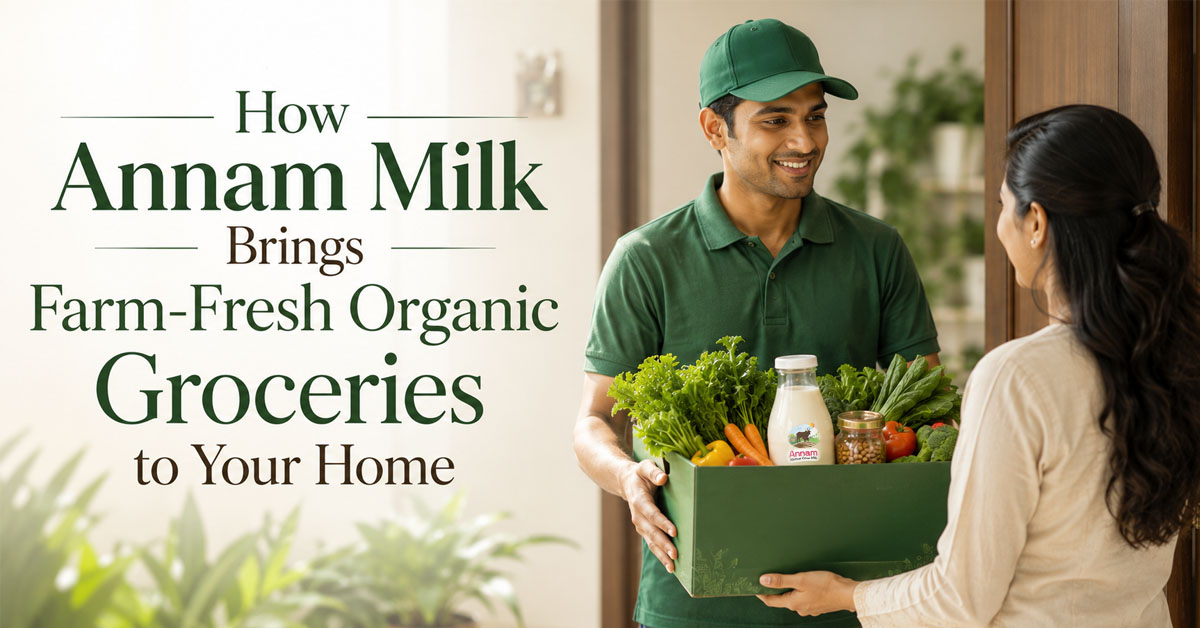
Chennai has a lot of grocery options these days, but most of them still shrug at the same basic question. Where did the produce actually come from, and who grew it? Annam Milk started with A2 desi cow milk from native breeds like Ongole, Kangeyam, and Umbalachery, raised on open pasture in their organic farms in Chennai, and the same thinking now extends to vegetables, greens, fruits, eggs, rice, and dairy products beyond milk. The idea behind fresh farm-to-home groceries is simple: skip the middlemen, skip the cold storage warehouses, and get food to a family's door close to the same day it was harvested or milked.
That approach sounds obvious on paper, but very few grocery businesses actually build their operations around it. Most sourcing chains involve several handoffs between a farm and a customer's kitchen, and each handoff adds time, handling, and distance from the original harvest. Annam Milk cut most of those steps out by owning the farm, the cows, and the delivery process end to end, which is a big part of why the difference in taste and freshness is so noticeable to first-time customers.
What Actually Shows Up at Your Door
A lot of people still think of Annam Milk as just a milk delivery service. That's understandable given where the brand started, but the catalogue has grown well beyond the bottle.
- Raw, unpasteurized A2 milk from native cow breeds, chilled and delivered the same morning
- Organic curd, paneer, ghee, and unsalted butter made from that same milk
- Organic greens and vegetables grown in the farm's red soil
- Country chicken eggs from free-grazing hens
- Traditional rice varieties such as Mappillai Samba, Seeraga Samba, Karuppu Kavuni, and Thooya Malli
- Cold-pressed oils, millets, and lentils produced without synthetic inputs
That range is exactly what makes a subscription with Annam Milk different from a one-off order on a regular grocery app. A family isn't just buying milk anymore. They're building a weekly basket of farm fresh vegetables, dairy, grains, and protein from one trusted source instead of piecing it together from five different vendors.
Why Farm Fresh Vegetables Actually Taste Different
Ask anyone who's switched over and they'll usually mention the same thing first: the vegetables taste like they used to as a kid. That's not nostalgia talking. The difference is soil and timing.
Annam Farms grows its greens and vegetables in red soil using crop rotation, organic manure, and natural pest management instead of synthetic fertilizer and chemical sprays. No shortcuts, no forcing growth with artificial inputs. The produce is harvested close to the delivery window rather than sitting in a distribution warehouse for days, which is the actual reason farm fresh vegetables from a working farm taste noticeably different from something that's traveled through three or four hands before reaching a store shelf.
There's also a quieter benefit that doesn't show up on a nutrition label. Vegetables grown this way tend to hold their texture and flavor better once cooked, since they haven't been sitting in cold storage losing moisture and nutrients for a week before anyone buys them.
The farming method matters just as much as the timing. Annam Farms relies on crop rotation, animal manure from its own cows, green manures, and legumes to keep the soil fertile year over year, rather than depending on synthetic fertilizer to force short-term yields. Healthier soil produces sturdier plants, and sturdier plants tend to need fewer interventions to survive pests and disease in the first place. This slower farming method is also why the vegetables hold up so well once they leave the farm.
Making Organic Grocery Shopping Online Actually Convenient
Buying good produce shouldn't mean driving to a farmers' market every weekend and hoping the good stuff hasn't sold out. Annam Milk built its subscription model around solving that specific problem.
Here's how organic grocery shopping online works through the platform:
- Choose a milk subscription plan, daily, alternate days, or specific weekdays, based on what fits a household's routine.
- Add on vegetables, greens, fruits, eggs, rice, or other farm produce through the same order.
- Adjust quantities, pause deliveries while traveling, or make one-off purchases through the app or website whenever needed.
- Get everything delivered to the doorstep across a wide range of neighborhoods in Chennai, from Adyar and Alwarpet to Tambaram and Velachery.
This kind of organic grocery shopping online removes most of the friction that keeps people from eating better day to day. Nobody has to remember to visit a specific stall on a specific morning, and nobody has to guess whether what they're buying was actually grown the way it's advertised. The invoice, the delivery schedule, and the sourcing are all visible and consistent.
Why People Actually Stick With It
Plenty of grocery brands talk about trust. Fewer earn it the slow way, through years of showing up on time with the same quality every single day. Reviews from Annam Milk customers point to a pattern rather than a one-time good experience: consistent delivery timing, honest handling when something goes wrong, and produce that holds up to repeated, informal comparison against whatever else is available locally.
A few things tend to come up again and again from long-term customers:
- Deliveries arriving reliably in the early morning window, even during difficult periods like lockdowns
- Quick resolution when a delivery goes to the wrong address or a bottle arrives spoiled
- Vegetables and eggs that hold up well against home taste tests, including the classic grandmother's verdict
- A genuine willingness from the team to replace or refund when something isn't right
None of that happens by accident. It's the result of a farm that controls its own supply chain from soil to doorstep, rather than reselling produce sourced from unknown third parties.
That kind of control also means the team catches and fixes problems faster. When a farm owns the entire process, from feeding the cows to harvesting the greens to running the delivery routes, there's no vendor to blame and no gap in accountability. If something goes wrong, whether that's a missed delivery window or a batch of vegetables that doesn't meet the usual standard, the same team that grew it is the one fixing it, which tends to produce a very different level of service than a business simply reselling someone else's produce.
Bringing It Back Home
Good food starts with good decisions made long before anything reaches a plate, including decisions about soil, seed, feed, and how animals and crops are actually raised. Annam Milk built its business on that principle with dairy first, and it now carries the same standard through to eggs, grains, and produce.
For a Chennai household trying to eat better without adding another weekend errand to the list, a subscription that combines fresh milk with a rotating selection of organic vegetables in Chennai and other farm produce solves two problems with one order: sourcing food that's actually grown the way it claims to be and doing it without a lot of extra effort. Fresh farm-to-home groceries were never meant to be complicated, and once the right supply chain is in place, they simply aren't. Fresh farm-to-home groceries, delivered consistently and without shortcuts, are really the whole promise Annam Milk set out to keep.
