


Annam Milk © All Rights Reserved.

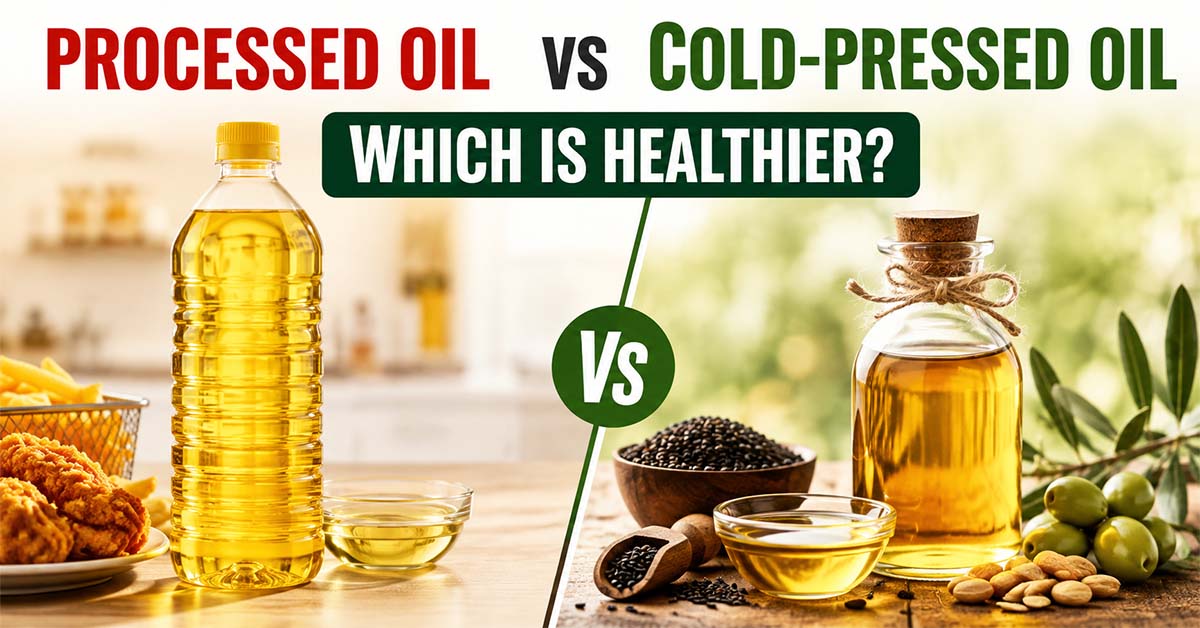
Walk into any Chennai kitchen and chances are you will spot two bottles of cooking oil sitting on the shelf. One is refined. The other, more often these days, is cold-pressed. This is not just a passing preference. Households across Tamil Nadu are paying closer attention to how their oil is made and what that process actually does to its nutrients. If you have typed "Cold Pressed Oil in Chennai" into a search bar recently, you have probably noticed how many brands now lead with their extraction method rather than just the price tag. That is because the method genuinely changes what ends up in the bottle. In this blog, we will take a closer look at how processed and cold-pressed oils differ and why that difference matters once the oil reaches your plate.
How Processed Oil Is Made
Refined oils go through several industrial stages before they land on a supermarket shelf. Seeds or kernels are heated at high temperatures and then treated with solvents, hexane being the common one, to pull out as much oil as possible. Once extracted, the oil gets bleached, deodorised, and often chemically neutralised so it has no strong smell and lasts a long time.
There is no denying the efficiency here. Large volumes get produced at a lower cost, and that is exactly why refined oils dominate most kitchens. But something gets sacrificed along the way. The heat and chemical treatment strip out much of the natural antioxidants, vitamins, and phenolic compounds that the raw seed originally held. What is left behind tastes neutral and sits on a shelf for months, but its nutritional value is a shadow of what it started with.
How Cold-Pressed Oil Is Made
Cold-pressed oil takes a far slower path. Seeds or nuts get crushed mechanically, often using a wooden or steel press known locally as a chekku or ghani, without any external heat applied. Temperatures during the process typically stay under 50 degrees Celsius. No solvents are used, and there is no chemical refining afterward.
Because heat and chemicals never enter the picture, the oil keeps its natural colour, smell, and taste intact. It also holds onto far more of its original nutrition, things like vitamin E, polyphenols, and healthy fatty acids that refining usually destroys. The yield is lower, so the price is higher too. Still, once people understand what they are actually paying for, most find it a fair trade.
Nutritional Differences That Matter
The real gap between these two oils comes down to what survives the extraction.
- Cold-pressed oil hangs onto more antioxidants, which help the body push back against oxidative stress
- It retains natural vitamin E, useful for both skin and immune function
- Its fatty acids stay closer to their original structure, something researchers have tied to better heart health
- Processed oil tends to lose most of this during high-heat extraction and chemical treatment
None of this makes processed oil unsafe. It meets required safety standards and is perfectly fine for regular use. But when it comes to the micronutrients that support long-term health, cold-pressed simply has more to offer.
Taste, Aroma, and How It Behaves in Cooking
Cook with both oils side by side and the difference hits you almost instantly. Cold-pressed oil carries the natural character of whatever it came from. Cold-pressed groundnut oil smells unmistakably nutty. Cold-pressed sesame oil has a warm, earthy depth that its refined counterpart cannot come close to matching.
Processed oil, on the other hand, is built to be neutral on purpose. That makes it practical for deep frying or large-batch cooking, but it also means it barely contributes any flavour of its own. In South Indian cooking especially, where oil often shapes the flavour of a dish rather than just cooking it, this distinction is not a small one.
Shelf Life and How to Store It
Refined oil lasts longer because the very things that make oil nutritious, its natural enzymes and impurities, are stripped out during processing. Cold-pressed oil, being closer to its raw form, is more sensitive to heat and light and does not keep as long. Store it somewhere cool and dark, and try to use it up within a few months so it does not lose its edge.
Choosing What Works for Your Kitchen
This does not have to be an either-or decision. Plenty of households use cold-pressed oil for daily cooking and dressings while keeping refined oil around for the occasional deep fry that needs a higher smoke point. What matters is knowing what each oil brings to the table and picking based on how you actually cook and what your health priorities look like.
At Annam Milk, we believe food should nourish the way nature intended, without layers of unnecessary processing getting in the way. Our approach to cold-pressed oils comes from the same place as our A2 milk and organic range: less interference, more nutrition. We stay committed to traditional extraction methods because we believe what goes into your body should stay as close to its natural state as possible. If you are reconsidering what sits in your kitchen, we would love for you to discover what honestly made, cold-pressed oil can add to your everyday cooking.
